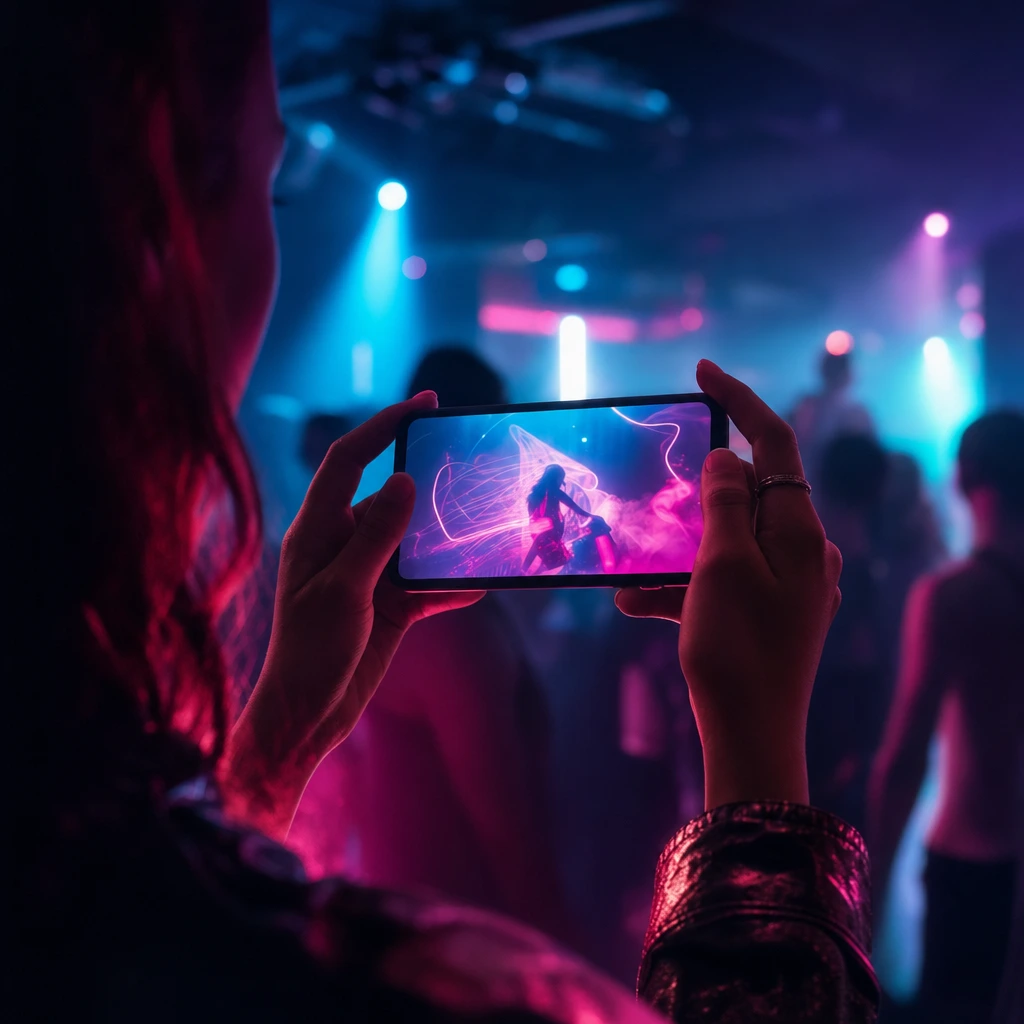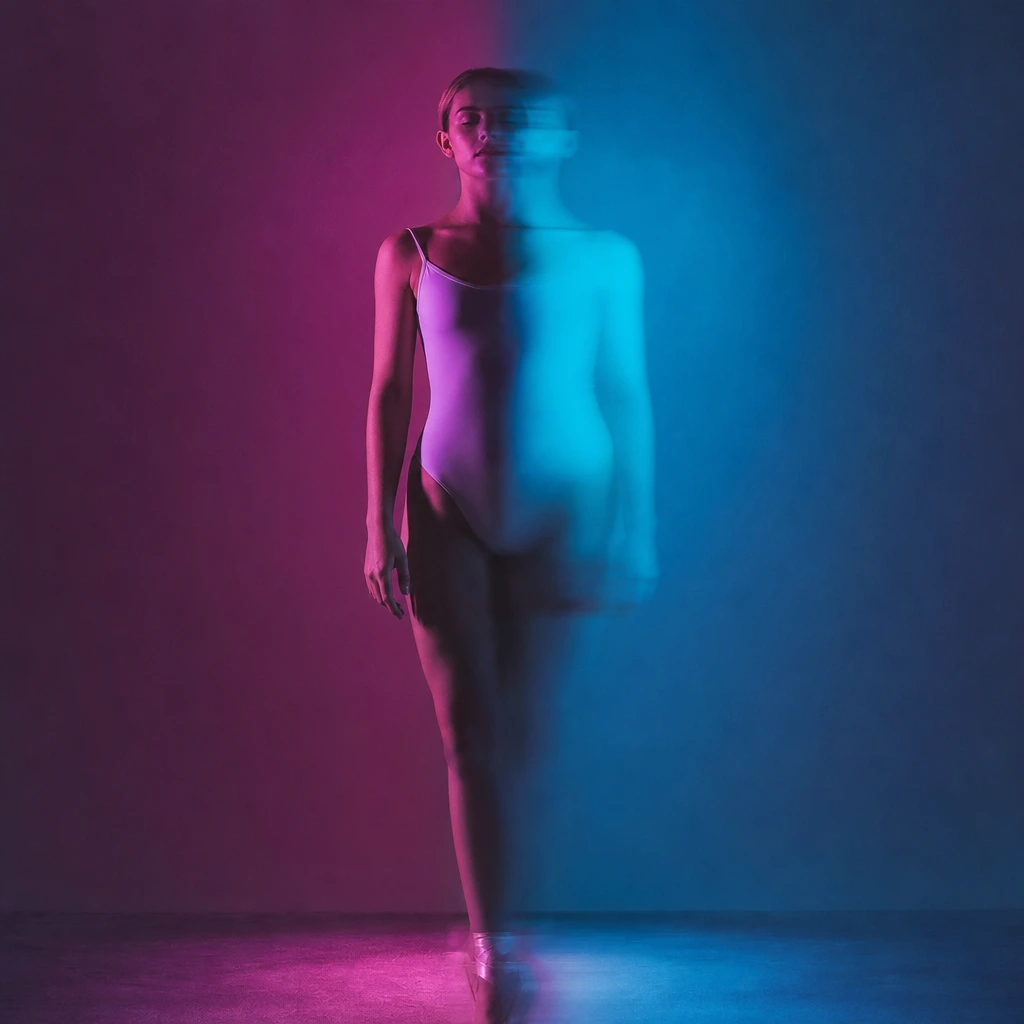
Hardstyle is not just fast dancing. It is a stance, a silhouette and a lighting style. The kick is relentless, the arms are up, the legs are wide and the crowd is a wall of dark shapes against bright lasers. A hardstyle clip that reads correctly on a phone screen is doing three things at once: showing the stance, keeping the arms in frame and matching the energy of the track.
This guide covers the BPM, the moves that survive a single photo, the outfit and lighting that sell the look, and the music rules that keep the clip online.
The hardstyle silhouette
At thumbnail size, a hardstyle dancer is a shape: wide legs, raised fists, a strong upper body. The details of the outfit matter less than the contrast. A black outfit against a bright stage, or a white outfit against a dark crowd, reads instantly. A busy print dissolves into noise.
The best photo for an AI clip is a full-body shot with:
- Feet shoulder-width or wider. The stance is the foundation.
- Arms raised or extended. Not folded, not in pockets.
- A high-contrast outfit. Black and white, neon and dark, metallic and matte.
- A clear silhouette. No crowd or prop hiding the body line.
- Even light on the face. The model needs the face to anchor identity.
A seated portrait or a tight headshot will produce a generic dance, not a hardstyle clip. The style lives in the legs and arms.
BPM and the 8–10 second limit
Hardstyle usually sits around 140–150 BPM. In 8–10 seconds you get roughly 18–25 beats. That is enough for one drop, one jump or one arm sequence. It is not enough for a full routine.
The clip’s duration is fixed by the scene. You cannot stretch it to fit a longer track without making the motion look slow. Instead, trim the clip to the beat and let it loop. A 10-second clip can be cut into two 5-second halves and placed on two different drops.
If you are editing in CapCut, set the track first, then trim the video so the first strong arm shape lands on a kick. At 150 BPM, one bar is 1.6 seconds; four bars is 6.4 seconds. That is your natural cut.
The moves that read on camera
Hardstyle has many subgenres and regional styles, but the moves that survive a single photo are the big ones:
- Fist pumps. The arms are the story; keep them away from the body.
- Wide-stance bounce. The legs create the energy; do not crop them.
- Jump cues. A photo with both feet off the ground is hard to fake, but a crouched, ready-to-jump stance reads well.
- Arm sweeps. A strong diagonal line from shoulder to hand.
- Crowd-facing pose. Eye contact and a raised fist read as performance.
Fine footwork and intricate hand patterns are lost at thumbnail size. Save them for a real video; for an AI clip, choose the big shapes.
Outfit and lighting
Hardstyle fashion is built on contrast and attitude: black cargo pants, a graphic jersey, a bomber jacket, boots, a cap. Neon accents and reflective materials catch the stage light. Avoid all-white in a bright scene and all-black in a dark scene; the silhouette disappears.
The scene supplies the lighting. Choose one with strong beams, a dark crowd and a wide frame. The neon stage and the two-person trend scenes are the closest matches. A soft, warm portrait scene will fight the hardstyle mood.
If your photo was taken at a festival with a harsh phone flash, do not over-edit it. The flash can flatten the face, but the silhouette still works. A slightly soft photo with a clear shape is better than a heavily filtered one.
Music rights
The clip is silent. Add a licensed hardstyle track from TikTok, Reels or Shorts, or use a track you have written permission to use. Do not rip a festival set and re-upload it; the platform will mute or remove the clip.
For a client project, use a royalty-free track with a commercial licence and keep the receipt. The tool grants no music rights. A hardstyle track that sounds "underground" is still copyrighted.
Common mistakes
- Cropping the feet. The clip becomes a generic upper-body dance.
- Using a seated photo. The stance disappears.
- Choosing a slow, warm scene. The energy fights the track.
- Stretching the clip to fit the song. The motion looks rubbery.
- Ripping a festival set. The platform mutes the audio.
- Expecting perfect hands. Fast fists are the hardest thing for the model.
A 10-second shot list
A prepared scene is fixed, but you can still plan the edit around its beats. A simple 10-second structure:
- 0–2 s: the stance. Let the viewer read the silhouette before the first big move.
- 2–4 s: the first arm sweep. This is the hook; make sure the hands are in frame.
- 4–6 s: the fist pump or jump cue. Cut on the kick if you are editing to a track.
- 6–8 s: the turn or the second sweep. Keep the feet visible.
- 8–10 s: the hold. End on a strong shape so the loop back to the first frame feels intentional.
If the clip is 8 seconds, drop the turn and hold the final shape for the last second. Do not stretch the clip to reach a 10-second slot; trim the track instead.
How to judge the clip
Watch it three times with a specific question each time. First: is the silhouette readable at thumbnail size? Second: do the hands and feet survive the fastest frame? Third: does the lighting match the track’s energy?
If the silhouette is weak, change the photo or the outfit, not the prompt. If the hands fail, choose a wider scene with slower arm movement. If the energy is wrong, change the track before you regenerate. Most “bad” hardstyle clips are a mismatch between the scene and the song, not a model failure.
What to do next
Open the hardstyle dance video tool and pick a wide scene. If you are comparing styles, read Melbourne shuffle vs Tecktonik. If you want the music side, start with the Tecktonik music guide and adapt the beat-sync math to 150 BPM.