Melbourne shuffle and Tecktonik grew up in different rooms. Shuffle came out of the Melbourne rave scene in the late 1980s and 1990s, then spread through YouTube tutorials and hardstyle festivals. Tecktonik came out of French electro clubs in the mid-2000s, spread through webcam videos and a very specific neon look. Both are often called "that fast dance from the internet", which is why they get mixed up.
The differences matter if you are making an AI dance clip, because a photo and a scene have to match the dance you want the viewer to read. This guide compares the moves, the music, the silhouette and the practical AI workflow.
The short version
| Melbourne shuffle | Tecktonik | |
|---|---|---|
| Lead body part | Feet and bounce | Arms and hands |
| Signature moves | T-step, running man, heel-toe | Tutting, waving, arm wave |
| Typical tempo | 140–150 BPM | 125–135 BPM |
| Music | Hardstyle, electro, shuffle mixes | French electro, electro-house |
| Best photo | Full body, visible shoes, wide stance | Three-quarter or full body, sharp arms |
| AI scene fit | Wide solo scene with feet in frame | Solo neon stage or a closer portrait |
Melbourne shuffle: footwork first
The shuffle is a footwork dance. The T-step, the running man and the heel-toe pivot create a continuous bounce, while the arms swing loosely to keep balance. The best dancers make it look effortless, but the engine is the feet.
For a still photo, the signals are:
- Visible shoes. Bright sneakers on a dark floor are the clearest signal.
- A wide stance. Feet apart, weight on one leg, the other ready to move.
- Loose arms. Arms away from the body, not folded or in pockets.
- A full-body frame. If the feet are cropped, the clip reads as a generic dance.
A shuffle photo taken from the waist up is almost useless. The model can animate the arms, but the viewer will not see the footwork that defines the style.
Tecktonik: arms and attitude
Tecktonik is arm-led. The dance is built on sharp elbow shapes, tutting, waving and a stiff upper body. The legs move, but they are not the story. A three-quarter portrait can carry the style because the arms and face are the whole silhouette.
For a still photo, the signals are:
- Sharp arm shapes. Elbows bent at strong angles, hands deliberate.
- Eye contact. The attitude is part of the dance.
- A dark, neon-ready outfit. The scene supplies the light; the outfit should not fight it.
- A three-quarter or full-body frame. A tight headshot loses the arms.
Tecktonik is the easier style for AI because the arms and face are in a smaller frame. Shuffle needs a wider scene and more body parts to stay consistent.
The music difference
Shuffle is usually danced to hardstyle or electro around 140–150 BPM. The kick is fast and relentless, and the dance rides the energy. Tecktonik is usually danced to French electro and electro-house around 125–135 BPM. The mood is colder, more synthetic and more posed.
If you put a hardstyle track under a Tecktonik clip, the arms look late. If you put a slow electro track under a shuffle clip, the feet look rushed. Match the track to the scene’s natural rhythm before you worry about the genre label.
Which AI scene fits which dance
The scene library is Tecktonik-first. That is an honest limitation. A prepared scene will not become a technically correct Melbourne shuffle just because you ask for one. The scene supplies the movement; you choose the scene whose movement and framing are closest.
- Shuffle: choose a solo scene that keeps the whole body and the feet in frame. The neon stage and the rain-lit pier are the safest starts. Avoid close-up scenes.
- Tecktonik: choose a solo scene with sharp arm movement and a dark, neon mood. A three-quarter frame is enough.
- Hardstyle: choose a wide scene with visible legs and arms, and a high-contrast festival look.
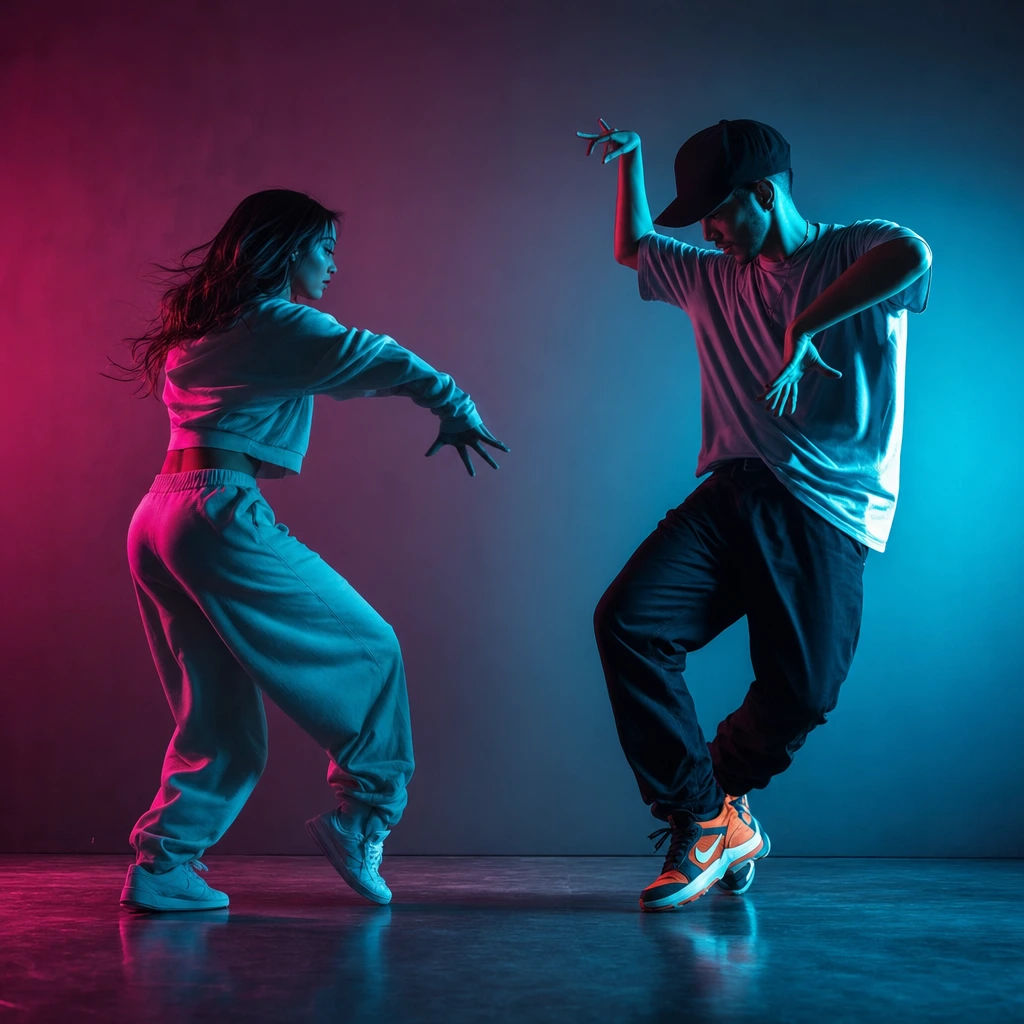
- Couple battle: use a duet scene with two separate photos. The scene supplies the interaction; you supply the two identities.
If the source scene does not contain footwork, no prompt will add it. That is the most important sentence in this guide.
Photo tips for both styles
For shuffle, wear shoes that contrast with the floor and stand with your weight on one leg. Keep your arms loose and away from your body. Do not crop the feet.
For Tecktonik, keep the face sharp and the arms visible. A dark outfit with a strong shape works better than a busy print. If you wear glasses, keep them in the direction line.
For both, use even light and a plain background. A sharp, front-lit photo is worth more than a stylish, dark one. The photo guide covers the details.
Can AI actually tell the difference?
At thumbnail size, viewers read the silhouette, the music and the caption. A clip with visible footwork and a hardstyle track reads as shuffle. A clip with sharp arms and a neon club reads as Tecktonik. The AI does not need to understand the dance history; it needs to preserve the shape and the rhythm of the scene.
That is why the scene choice matters more than the prompt. If you want a shuffle clip, start with a scene that already looks like a shuffle. If you want a Tecktonik clip, start with a scene that already looks like Tecktonik. The prompt protects identity; the scene supplies the dance.
What to tell the model
The direction field is not a style selector. It is a constraint field. For a shuffle clip, the useful constraints are:
- “Keep the full body and both shoes in frame.”
- “Do not crop the feet.”
- “Preserve the shoes and the wide stance.”
- “Do not turn the clip into a close-up portrait.”
For a Tecktonik clip:
- “Preserve the sharp elbow angles and the hand shapes.”
- “Keep the face and the upper body in frame.”
- “Do not soften the arms into flowing motion.”
Do not write “make it a Melbourne shuffle” and expect the scene to change. The scene is the dance. The prompt protects the parts of the photo that make the dance readable.
What to do next
Open the Melbourne shuffle AI tool for a footwork-first scene, or the AI dancer tool for a Tecktonik-style portrait. If you want the music side, read the Tecktonik music guide. If you are making a hardstyle clip, start with the hardstyle dance video guide.